
What if the greatest obstacle to your growth as a leader is not your strategy, resources, or team, but your resistance to the feedback you do not want to hear?
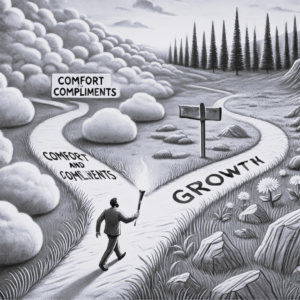
Most people appreciate recognition and praise. Positive feedback validates decisions and reinforces confidence. Compliments feel good, but they rarely drive meaningful growth. Leadership development comes from challenge, reflection, and correction.
Criticism, particularly the kind that stings, often contains the insights leaders need most. Honest and direct feedback has the power to reveal blind spots, strengthen decision-making, and elevate leadership effectiveness.
Many leaders struggle with criticism. Difficult feedback is often dismissed, minimized, or avoided altogether. Some leaders unintentionally surround themselves with people who agree with them, creating an environment where honest conversations become increasingly rare.
A dangerous message emerges when leaders consistently seek praise over truth:
“Tell me what I want to hear, not what I need to hear.”
The Fear Behind Feedback
Constructive feedback can feel uncomfortable because it often challenges how leaders see themselves.
Several common fears contribute to resistance.
Fear of Being Wrong
Critical feedback may expose weaknesses, poor decisions, or leadership gaps. Accepting those realities requires humility and self-awareness.
Fear of Looking Weak
Many leaders worry that admitting mistakes will damage their credibility. The opposite is often true. Accountability tends to strengthen trust rather than diminish it.
Fear of Uncertainty
Honest feedback can uncover deeper issues than originally anticipated. Addressing those issues may require difficult conversations, uncomfortable decisions, or significant change.
These fears are understandable. Exceptional leaders distinguish themselves by confronting those fears rather than avoiding them.
Rewiring Your Approach to Feedback
Leadership growth begins when feedback is viewed as an opportunity rather than a threat.
A different perspective can transform criticism into one of the most valuable tools for personal and professional development.
Shift Your Mindset
Defensiveness is a natural reaction when feedback feels personal. Effective leaders resist that impulse and choose curiosity instead.
Questions such as these can help create a more productive response:
- What can I learn from this?
- What perspective am I missing?
- What are they seeing that I have overlooked?
Curiosity creates space for growth. Defensiveness creates barriers to it.
Invite Brutal Honesty
Valuable feedback rarely appears on its own. Leaders must actively seek it.
Direct questions often encourage more meaningful conversations:
- If you were in my position, what would you do differently?
- What am I not seeing that may be holding us back?
- What is one thing I could do today to make your work easier?
Honest answers provide insights that leadership metrics and reports often miss.
Act on Feedback
Listening is only the first step.
Many leaders collect feedback but fail to implement meaningful changes. Team members quickly recognize the difference between leaders who listen and leaders who act.
Visible action demonstrates that feedback is valued and taken seriously.
Progress builds trust.
Model Vulnerability
Strong leaders acknowledge mistakes openly.
Statements such as, “I did not handle this well, and here is how I plan to improve,” create credibility and strengthen relationships.
Vulnerability should not be mistaken for weakness. Authenticity encourages trust, accountability, and continuous improvement throughout an organization.
The Hard Truth You Need to Hear
Great leaders are not defined by perfection.
Leadership excellence comes from the willingness to learn, adapt, and improve after mistakes occur.
The feedback you fear is often the feedback you need most.
Growth begins when leaders stop avoiding discomfort and start embracing it. Honest critique reveals opportunities that praise often conceals.
Leadership development requires humility, courage, and action.
Listen carefully.
Learn intentionally.
Act decisively.
The leaders who grow the most are often the ones willing to hear what others are afraid to say.