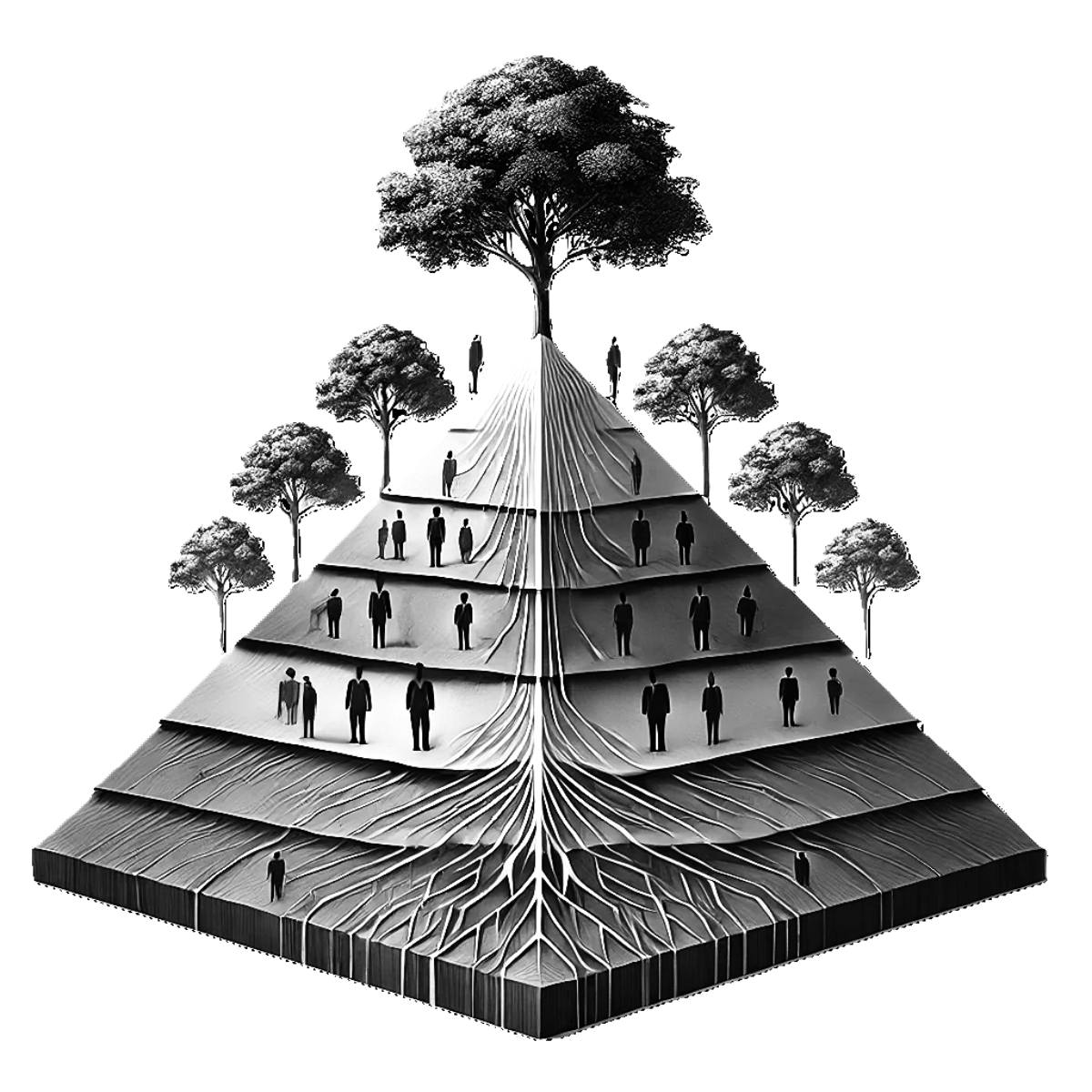
Society loves a good dream: “Work hard, hustle, and you will reach the top.” The reality, however, is far less romanticized. Not everyone is meant to be a leader.
Leadership is not about titles or power. Leadership requires grit, responsibility, emotional resilience, and vision. Many people either do not possess the desire for leadership or are not equipped for the demands that accompany it.
That reality does not represent failure. Organizations function effectively because people contribute in different ways and at different levels.
The workplace does not require every individual to compete for leadership positions. Organizations need people who understand their value and execute their responsibilities with excellence. The workforce operates both as an ecosystem and as a pyramid, two structures that explain why every role matters and why leadership positions remain limited.
The Workforce Ecosystem: Why Every Role Matters
The workforce functions much like an ecosystem in nature.
Every part of a natural ecosystem serves a purpose. Roots anchor the structure, trunks and branches create support and connection, and the canopy reaches upward to guide growth and direction.
Essential workers form the foundation of this ecosystem. Janitors, delivery drivers, grocery clerks, factory workers, maintenance teams, and countless others keep society functioning daily.
These workers represent the roots of the system.
Recognition may not always follow their contributions, yet everything above them depends on their work. Stability at the foundation allows businesses and institutions to operate effectively.
Mid-level managers, specialists, supervisors, and coordinators function as the branches. Their responsibilities connect strategy with execution while ensuring communication and operations remain aligned.
Executives, founders, visionaries, and senior leaders form the canopy. Strategic direction, difficult decisions, and organizational responsibility rest on their shoulders.
The roots stabilize.
The branches connect.
The canopy leads.
Every role serves a purpose, and organizations do not require everyone to occupy the top position.
Ecosystem Meets Pyramid: The Symbiotic Relationship
The workforce remains both interconnected and hierarchical. The ecosystem explains why every layer matters, while the pyramid demonstrates why leadership positions remain limited.
Organizations require balance, specialization, and execution across every level. Leadership positions cannot expand infinitely because systems depend on structure and distribution of responsibility.
The COVID-19 pandemic revealed this relationship clearly.
Delivery drivers transported essentials. Healthcare workers continued serving patients under extreme pressure. Grocery clerks kept stores operational. Janitors maintained safe environments for businesses and communities.
These workers became the foundation holding society together during uncertainty and disruption.
Senior leaders simultaneously faced the responsibility of making critical decisions affecting businesses, economies, employees, and communities. Every layer contributed to the survival and stability of the system.
No role operated independently from another.
Signs Leadership May Not Be for You
Leadership requires far more than ambition.
Emotional regulation, accountability, difficult decision-making, and the ability to separate personal emotions from professional responsibility all define effective leadership.
Strong emotional reactions to the idea of not leading often reveal discomfort with status rather than readiness for responsibility.
Effective leaders focus on responsibility instead of recognition. Pressure, scrutiny, and isolation frequently accompany leadership roles. Most people never fully see the weight leaders carry behind closed doors.
Many individuals do not want that burden, and many are not suited for it.
No shame exists in excelling as a specialist, contributor, operator, or support system within an organization. Businesses frequently fail because they lack dependable individuals throughout the organization, not simply because leadership falls short.
Final Thoughts: Own Your Role
Not everyone is meant to lead, and that reality does not diminish a person’s value.
Success should not be measured solely by titles or hierarchy. Meaningful success comes from fulfilling responsibilities effectively, contributing to the system, and creating value through consistent work.
Roots, branches, and canopy each serve distinct purposes. Every part remains essential to the health of the structure.
Organizations thrive because individuals across every level commit to their responsibilities with consistency, competence, and pride.
Strong systems are not built by everyone chasing leadership positions. Strong systems emerge when people understand where they contribute best and commit fully to that responsibility.